What Is a Stablecoin? A Beginner’s Guide.

A beginner's guide to stablecoins, what they are, why Nigerians use them, and how to send them safely.
If you've spent any time around crypto, you've probably heard people talk about USDT, USDC, and stablecoins. But what exactly is a stablecoin, and why has it become so useful for Nigerians dealing with digital dollars, international payments, and crypto?
A stablecoin is a type of cryptocurrency designed to maintain a relatively stable value, usually by being linked to an asset such as the US dollar. Unlike cryptocurrencies such as Bitcoin and Ethereum, whose prices can move significantly in a short period, stablecoins are built to reduce that volatility.
What Is a Stablecoin?
A stablecoin is a digital asset designed to maintain a stable value relative to another asset, most commonly the US dollar. For example, 1 USDT is designed to be worth approximately 1 US dollar, and 1 USDC is designed to do the same. This makes stablecoins useful for people who want to move or hold digital value without the price swings associated with many other cryptocurrencies.
Bitcoin
A decentralised digital asset with a market-driven price.
Stablecoin
Designed to maintain a stable value relative to an underlying asset.
This stability is one of the biggest reasons stablecoins have become popular for payments, transfers, trading, and moving money across the crypto ecosystem.
Why Are Stablecoins Important for Nigerians?
The Naira can fluctuate against the dollar, while many international products and services are priced in USD. Stablecoins provide a digital way to hold and transfer dollar-denominated value within supported crypto networks, useful for receiving dollar payments, sending money, paying for international services, or simply accessing dollar-linked digital value, without dealing with a physical dollar.
USDT vs USDC: What's the Difference?
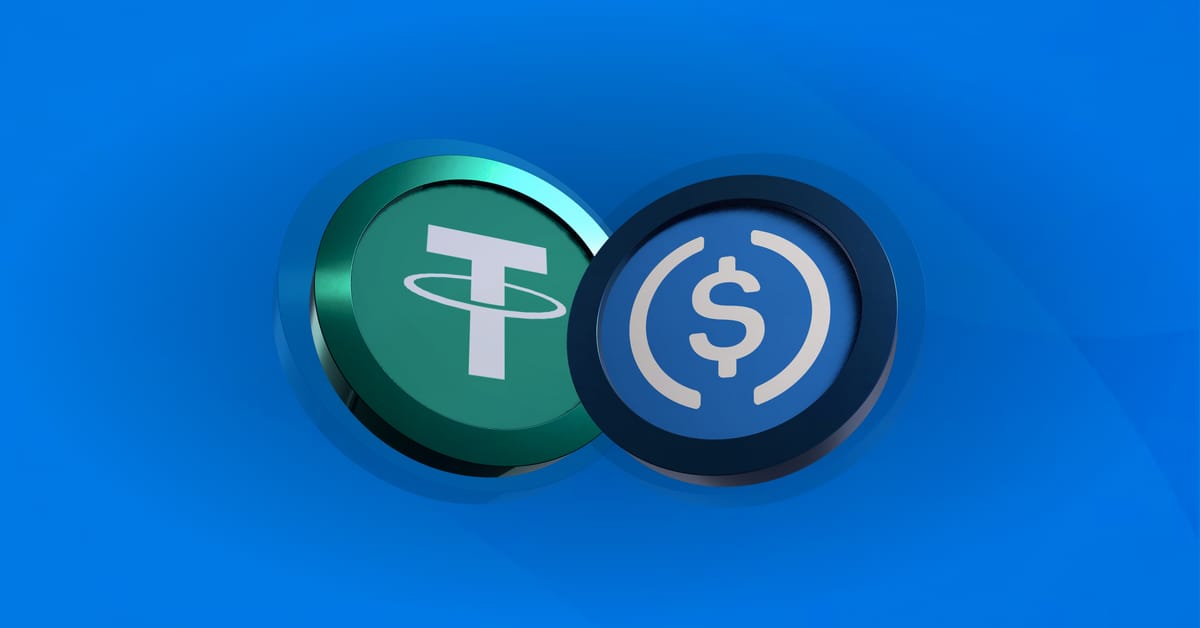
Both USDT and USDC are designed to maintain a value close to one US dollar, but they're issued by different organisations with different structures and reserves.
USDT
Issued by Tether, one of the most widely used stablecoins in the crypto market. Available across networks including Tron and Ethereum, and commonly used for transfers, trading, and payments.
USDC
Issued by Circle, also designed to hold close to one US dollar. Widely used across the crypto ecosystem, available on networks including Ethereum, Solana, and Base.
Neither is automatically "better" for every situation. The right choice depends on what you're trying to do, and what the receiving wallet, exchange, or platform supports. Before sending, always confirm that the stablecoin, the network, and the recipient's wallet are all compatible.
How Stablecoins Hold Their Value
The most common type is fiat-backed stablecoins, designed to be backed by reserves of assets intended to support their value. A dollar-backed stablecoin aims to stay close to $1 through reserves and mechanisms designed to support redemption and market stability.
But "stable" doesn't mean "guaranteed." Stablecoins can temporarily trade above or below their intended value, and that value can be affected by market conditions, liquidity, issuer-related factors, and broader financial or crypto-market events. There are also risks tied to the issuer, reserves, regulation, smart contracts, and the platform you use. It's worth understanding the specific stablecoin you're using rather than assuming every stablecoin works exactly the same way.
Stablecoins and Networks
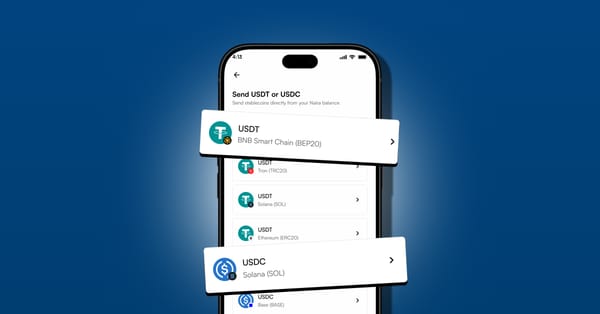
A stablecoin isn't tied to just one blockchain. USDT can exist on multiple networks, and so can USDC. You may see options such as TRC-20 (Tron), ERC-20 (Ethereum), BEP-20 (BNB Smart Chain), SOL (Solana), Base, and Arbitrum (both Ethereum Layer 2 networks). These networks differ in transaction speed, fees, and wallet compatibility.
Think of it like a delivery address paired with the wrong courier: the destination may be correct, but the delivery can still fail if the route isn't supported. If someone asks you to send USDT through TRC-20, select USDT and TRC-20. If they ask for USDC on Solana, select USDC and Solana. Never assume two networks are interchangeable just because they carry the same stablecoin. Sending through an unsupported network can leave funds inaccessible or in need of recovery.
How Nigerians Use Stablecoins
- Sending money: transfer supported stablecoins to another crypto wallet or platform without using traditional bank transfer rails.
- Receiving digital payments: freelancers, creators, remote workers, and businesses can receive payments in stablecoins when sender and recipient support the same asset and network.
- Moving dollar-denominated value: stablecoins track the US dollar, making them useful for moving digital dollar value.
- Paying for crypto-related services: stablecoins are widely used for trading and payments on supported platforms.
Sending Stablecoins With Spenda
Traditionally, someone holding Naira would need to convert it into USDT or USDC before sending it. Spenda makes this simpler. With Spenda 2.0, you can send supported USDT and USDC directly from your Naira balance, without manually swapping first.
Spenda supports multiple networks, including TRC-20, BEP-20, Solana, ERC-20, Base, and Arbitrum, subject to availability for the selected stablecoin, so there's no separate swap to figure out before sending.
Amounts and Timing
Spenda allows you to send any amount of supported stablecoins. Whether you're sending a small amount or making a larger transfer, always review the final amount, network, and recipient address before confirming.
Transfers through Spenda are designed to be instant, though final confirmation can depend on the selected network and its processing conditions. Always wait for the transaction status to update, and avoid sending the same transaction repeatedly just because confirmation hasn't appeared yet.
Common Stablecoin Mistakes to Avoid
- Sending to the wrong network: USDT on TRC-20 and USDT on ERC-20 aren't interchangeable just because they're both USDT.
- Copying the wrong wallet address: always verify the address carefully before confirming.
- Assuming every stablecoin is identical: USDT and USDC have different issuers and structures.
- Ignoring fees: check the final transaction amount and applicable fees before sending.
- Believing "stable" means risk-free: stablecoins can experience temporary price deviations and other risks.
Stablecoins vs Traditional Dollars
What's the difference between holding $100 in a bank account and holding roughly $100 worth of a dollar-backed stablecoin? The biggest difference is how the value is held and transferred. Traditional dollars exist within the banking and financial system, while stablecoins exist as digital assets on blockchain networks, transferable to a compatible crypto wallet, potentially across borders and without using traditional banking rails.
Stablecoins are not bank deposits, though, and owning one doesn't necessarily give you the same protections or guarantees as holding money in a regulated bank account. That difference is worth understanding before you rely on either one.
Frequently Asked Questions
Can I send USDT or USDC from Naira?
Yes. With Spenda, supported USDT and USDC transfers can be made directly from your Naira balance without manually swapping your Naira first.
What is the difference between USDT and USDC?
Both are dollar-linked stablecoins, but they're issued by different organisations with different structures, reserves, and ecosystems.
Which network should I use for USDT or USDC?
Use the network specified and supported by the recipient. Depending on the asset and platform, options may include TRC-20, ERC-20, BEP-20, Solana, Base, or Arbitrum.
Can stablecoins lose their value?
Stablecoins are designed to maintain a stable value, but they can temporarily trade above or below their intended value and carry other risks.
Are stablecoin transactions reversible?
Generally, blockchain transactions should be treated as irreversible once confirmed. Always verify the recipient address, asset, and network before sending.
The Simple Way to Think About Stablecoins
A digital, dollar-linked value that can move on a blockchain. USDT and USDC are two of the most widely used examples, and with Spenda, you don't need to manually swap your Naira before sending them.
Download Spenda